
Estimated reading time: 7 minutes
Key Takeaways
- AI POS Integration embeds artificial intelligence into restaurant Point of Sale systems, automating tasks and personalizing customer experiences.
- It significantly increases operational efficiency through automated inventory, smart scheduling, and order routing.
- Advanced AI features include voice-activated ordering, chatbots for reservations, and predictive analytics for sales and staffing.
- Benefits extend to enhanced customer experience with personalized promotions and smarter inventory management, reducing waste and stockouts.
- AI POS enables data-driven decision-making, providing actionable insights for menu optimization, pricing, and staffing.
- It acts as a core component of smart restaurant technology, seamlessly integrating with Kitchen Display Systems (KDS), IoT sensors, and online platforms.
- The future promises hyper-personalization, autonomous operations, and even deeper predictive capabilities, emphasizing ethical considerations and data privacy.
Table of Contents
- Understanding AI Integration with Restaurant POS Systems
- The Unmatched Benefits of an AI POS System
- Practical Ways AI Can Enhance Your Restaurant POS Capabilities
- AI POS: A Core Component of Smart Restaurant Technology
- Peering into the Future of Restaurant POS AI
- Conclusion: Embracing the AI-Powered Restaurant Revolution
Imagine a restaurant where everything runs like a well-oiled machine, almost as if it has its own super-smart brain. Orders are taken perfectly, ingredients never run out, and staff always know exactly when and where to be. This isn’t a dream from the future; it’s happening right now, thanks to something called AI POS integration.
This fancy phrase, AI POS integration, simply means embedding artificial intelligence (AI) into a restaurant’s Point of Sale (POS) systems. Think of a POS system as the main computer or tablet where orders are taken, payments are processed, and everything about a sale is recorded. When you add AI to it, this system gets super smart. It can automate tasks, make things run more smoothly, and even personalize experiences for customers in ways that were impossible before thebossman.ai.
Why are more restaurants jumping on this bandwagon? Well, the restaurant world is very competitive, and it can be hard to find enough staff. Plus, customers today expect quick, easy, and amazing service. These challenges are pushing eateries to adopt AI-powered Point of Sale (POS) systems. The goal is simple: boost efficiency and give every customer a smooth, unforgettable dining experience thebossman.ai, fullestop.com, loman.ai.
This new wave of smart technology is completely changing how restaurants are managed. It’s like giving restaurant owners superpowers! They can automate things like tracking food supplies, figure out the perfect number of staff members needed, offer super-personalized service to each guest, and gain amazing insights into their business that help them make smart choices thebossman.ai, loman.ai.
In this blog post, we’re going to dive deep into how AI integration with restaurant POS systems is making daily operations smoother and opening up a whole new world of possibilities for what restaurant management can achieve. Get ready to explore the future of dining!
Understanding AI Integration with Restaurant POS Systems
So, what exactly does AI integration with restaurant POS mean? It’s the process of taking a regular Point of Sale (POS) system – the digital cash register or tablet where all transactions happen – and giving it a brain powered by artificial intelligence. This means the system can now do much more than just ring up sales; it gains cool new abilities like automation, predicting what might happen next, and even chatting with customers in a personalized way thebossman.ai, fullestop.com, loman.ai.
Think of it this way: a basic POS system is like a very smart calculator. It keeps track of sales and what’s in stock. But an AI-integrated system is like adding a super-smart assistant to that calculator. This assistant can learn from past information and make clever guesses about the future.
Basic AI Functions in POS Systems
Even at its simplest, AI in a Point of Sale (POS) system helps with tasks that used to take a lot of human effort. These basic artificial intelligence capabilities are a huge time-saver.
- Automated Inventory Tracking: Instead of someone manually counting all the tomatoes or cheese, the AI system can keep an eye on ingredients. It knows when you sell a pizza, so it subtracts cheese from your stock. It learns how fast ingredients are used. thebossman.ai
- Smart Scheduling: Based on how busy the restaurant usually is on, say, a Tuesday evening, the AI can suggest how many staff members are needed. thebossman.ai This is based on looking at tons of old sales data – what was sold, when it was sold, and how many customers were served.
- Order Routing: When a customer orders a burger, the AI makes sure that order instantly goes to the grill station in the kitchen, while a dessert order goes to the dessert station. This prevents confusion and speeds up getting food to the table.
Advanced AI Functionality
But AI can do even more amazing things! It’s like upgrading from a basic assistant to one with superpowers. These advanced features truly enhance the guest experience and streamline restaurant workflows.
- Voice-Activated Order-Taking: Imagine just speaking your order into a kiosk or drive-thru speaker, and the AI understands exactly what you want, even if you mumble a little! It’s like talking to a very smart friend who never gets orders wrong. thebossman.ai
- Chatbots for Reservations and Customer Inquiries: These are like friendly robot helpers on a website or app. You can ask them to book a table for you or find out if the restaurant has vegetarian options. They can answer questions instantly, so human staff can focus on other important tasks. thebossman.ai It’s like having an extra team member who never sleeps!
- Predictive Sales and Staffing Analytics: This is where AI truly shines. It looks at weather patterns, local events, past sales, and even holidays to predict exactly how many customers might come in next week. This helps restaurant owners know precisely how much food to prepare and how many people to schedule to work thebossman.ai, fullestop.com.
- Personalized Promotions: Has AI noticed you always order the chocolate cake? Next time, it might offer you a special deal on a new dessert it thinks you’ll love. It learns your tastes and suggests things just for you. thebossman.ai
- Real-time Fraud Detection: The AI keeps a watchful eye on every transaction. If it sees something suspicious, like many small orders with the same credit card in a short time, it can flag it immediately, helping to prevent theft or fraud voiceplug.ai. thebossman.ai
To give you a clear picture, let’s look at a simple comparison. A regular Point of Sale (POS) system is good at tracking numbers: how many burgers were sold, how much flour is left. It’s a record keeper. But an AI-integrated system goes beyond just recording. It predicts. It can tell the owner: “Based on past trends, you’ll need to reorder more cheese by Friday.” It can also forecast: “Next Tuesday looks busy, so schedule extra staff.” And it can even help servers: “This customer often orders spicy food, so suggest the new jalapeño appetizer!” This proactive approach is what makes AI in POS systems so revolutionary fullestop.com, get.popmenu.com. It turns a simple transaction device into a strategic business partner.
The Unmatched Benefits of an AI POS System
Bringing an AI POS system into a restaurant is like giving the business a massive upgrade. It’s not just about doing things a little bit better; it’s about completely transforming how a restaurant operates. The advantages are huge, touching almost every part of the business, from the kitchen to the customer’s table. Let’s explore some of the biggest wins:
Increased Operational Efficiency
Imagine how much time and effort goes into running a busy restaurant every day. There are orders to take, inventory to check, and staff to manage. With AI, many of these time-consuming tasks get done automatically. This intelligent automation drastically cuts down on manual data entry, meaning employees spend less time typing and more time helping customers.
When orders are taken, the AI-powered Point of Sale (POS) speeds up the entire process, sending them instantly to the right kitchen station. It also predicts busy times, like lunch rushes or dinner crowds, and helps allocate staff accordingly. This ensures there are enough hands on deck when needed, leading to smoother service, shorter wait times, and a happier workforce thebossman.ai, fullestop.com, get.chownow.com, spd.tech.
Enhanced Customer Experience
Making customers happy is the ultimate goal for any restaurant, and AI plays a huge role here. By understanding past orders and preferences, the artificial intelligence system can suggest menu items that a customer is likely to enjoy. This makes ordering quicker, more accurate, and much less likely to have mistakes. No more accidentally getting onions when you asked for none!
Beyond just orders, AI creates a seamless experience, whether you’re eating inside, picking up takeout, or having food delivered. This unified, high-quality service across all ways customers interact with the eatery builds loyalty and makes guests want to return again and again thebossman.ai, loman.ai, get.popmenu.com.
Smarter Inventory Management
Food waste is a big problem for restaurants, and running out of popular ingredients is equally frustrating for customers. AI tackles both these issues head-on. Using powerful predictive analytics, the intelligent Point of Sale (POS) system can accurately guess how much of each ingredient will be needed. It looks at sales history, upcoming events, and even weather forecasts to make these predictions.
This means restaurants can order just the right amount of food, reducing waste because less food goes bad. It also prevents those annoying “Sorry, we’re out of that!” moments, ensuring that popular menu items are always available. Customers get what they want, and the restaurant saves money by not over-ordering thebossman.ai, fullestop.com, get.chownow.com.
Data-Driven Decision Making
Imagine having a super-smart detective who analyzes every single piece of information about your business. That’s what AI does for restaurant owners. It processes massive amounts of data from sales, customer feedback, inventory, and more. Then, it doesn’t just show you the data; it finds important trends and provides “actionable insights”—meaning clear advice on what to do.
This powerful analytical capability helps restaurant managers make smarter choices. They can fine-tune their menus, create more effective promotions, set optimal prices, and adjust staffing levels for maximum profit. This ability to understand exactly what’s working and what’s not is invaluable for growing a successful business thebossman.ai, get.popmenu.com, spd.tech.
Fraud Detection and Security
Unfortunately, some people try to cheat or steal, even from restaurants. This can happen with fake credit cards or employees trying to hide transactions. This is where artificial intelligence (AI) becomes a powerful security guard for the Point of Sale (POS) system.
AI algorithms constantly watch every single transaction, looking for anything out of the ordinary. If it sees strange patterns or suspicious activities that don’t fit the usual behavior, it flags them immediately, helping to prevent theft or fraud thebossman.ai.
Reduced Labor Costs and Optimized Staffing
One of the biggest costs for any restaurant is paying its staff. It’s a delicate balance: you need enough people to provide great service, but not so many that you’re paying for staff who aren’t busy. AI solves this puzzle beautifully.
By using its powerful forecasting abilities, the AI system can accurately predict when the restaurant will be busy and when it will be slow. It then creates staff schedules that perfectly match these predicted demands. This means fewer unnecessary labor hours during quiet times, saving money without sacrificing service quality during peak hours. thebossman.ai It’s a win-win for both the restaurant’s budget and the customer’s experience fullestop.com, loman.ai, get.chownow.com.
Practical Ways AI Can Enhance Your Restaurant POS Capabilities
Now that we know the incredible benefits, let’s look at some super cool and practical ways that artificial intelligence can enhance POS with AI in a real restaurant setting every single day. These are not just futuristic ideas; they are happening right now, making dining out and working in restaurants easier and more enjoyable.
Voice Ordering and Chatbots
Imagine walking into a restaurant or driving up to a fast-food window and just speaking your order naturally. “I’d like a cheeseburger, no pickles, and a large fry.” AI-powered systems can understand your voice, process your order, and send it straight to the kitchen. This happens through special apps, self-service kiosks, or even through smart drive-thrus. It’s quick, convenient, and reduces the chance of mishearing an order thebossman.ai, voiceplug.ai.
Even before you step foot in the door, AI-powered chatbots can be your restaurant’s digital front desk. These clever computer programs can answer common questions like, “What time do you close?” or “Do you have gluten-free options?” They can also handle reservation bookings with ease, all without a human employee needing to type a single response. This dramatically reduces the workload for staff, freeing them up to focus on guests who are already in the restaurant loman.ai, voiceplug.ai.
Here’s a video that shows how this advanced technology works in a restaurant setting:
Predictive Analytics for Sales and Staffing
One of the most valuable capabilities of an AI-enhanced Point of Sale (POS) system is its ability to look into the future, at least when it comes to sales and staffing. By crunching numbers from past sales, looking at historical data, and even considering external factors like local events or the weather forecast, AI can predict how busy the restaurant will be with amazing accuracy.
This forecasting power means restaurant managers can make smart decisions. They know exactly how many staff members to schedule for lunch, dinner, or even slower periods, avoiding both overstaffing (which costs money) and understaffing (which leads to bad service). It also helps identify menu items that aren’t selling well, perhaps suggesting they need a change or should be removed entirely thebossman.ai, fullestop.com, loman.ai, get.chownow.com.
Personalized Marketing and Loyalty Programs
Who doesn’t love feeling special? AI in a Point of Sale (POS) system helps restaurants treat every customer like a VIP. It remembers what you like, your past orders, any special dietary needs you have, and even how often you visit. This “memory” allows the system to segment customers, grouping them based on similar habits or preferences.
With this knowledge, the restaurant can send you highly personalized offers, special discounts on your favorite dish, or unique loyalty rewards. For example, if you always order pizza on Fridays, AI might send you a special “Friday pizza deal.” This level of personalization makes customers feel valued, significantly boosting repeat visits and making them more engaged with the restaurant thebossman.ai, get.popmenu.com.
Automated Menu Management
Managing a restaurant menu can be a lot of work. Prices can change, ingredients might run out, and sometimes special items are only available for a short time. An AI-powered Point of Sale (POS) system takes the headache out of menu management.
It can automatically adjust prices based on demand – for instance, offering a special discount on an item that’s usually slow-selling, or slightly increasing the price of a popular item during peak hours. If the kitchen runs out of a particular ingredient, the AI system can instantly remove that item from all digital menus, preventing customer disappointment. This intelligent automation helps restaurants maximize their income, keeps customers happy by showing accurate availability, and greatly simplifies the administrative tasks for staff thebossman.ai, get.popmenu.com.
Real-time Reporting and Dashboards
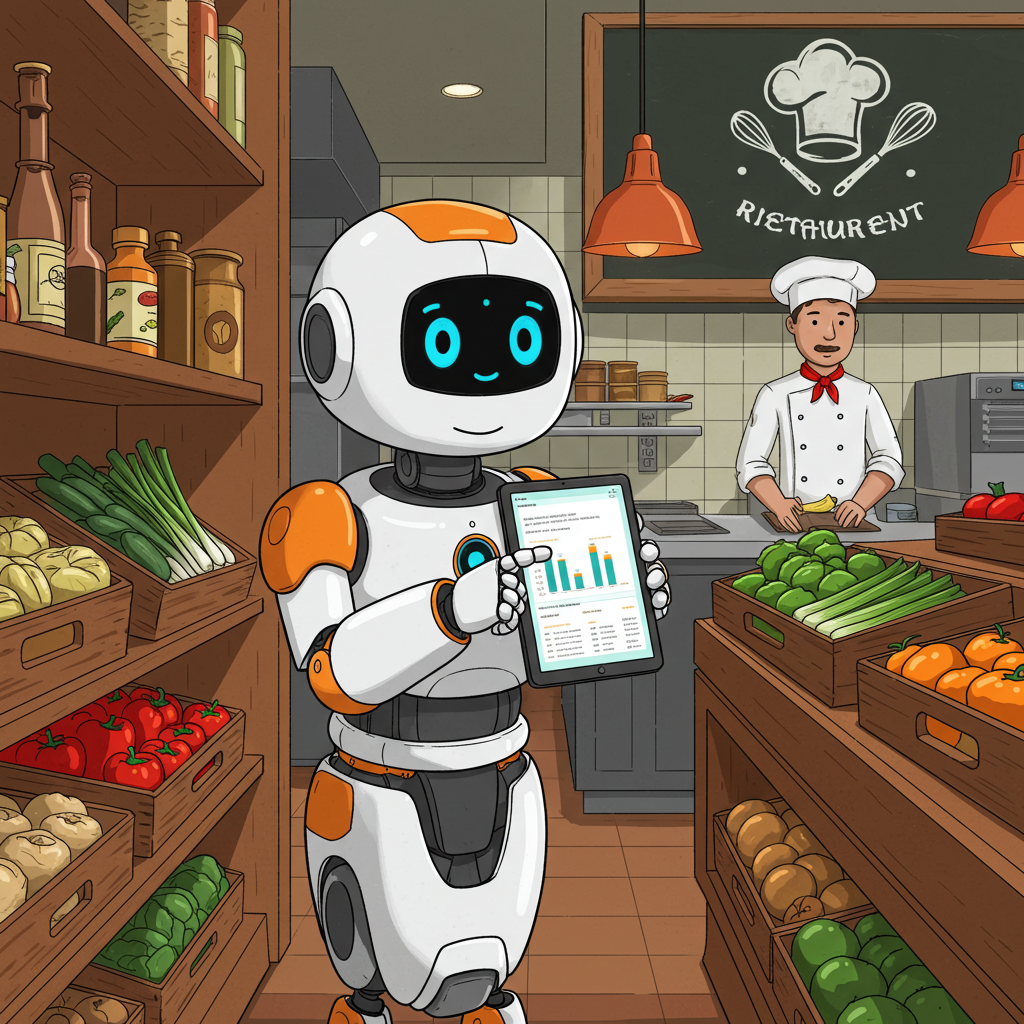
For restaurant managers, knowing what’s happening right now is crucial. AI-enhanced Point of Sale (POS) systems provide powerful, advanced dashboards that are like the “control panel” of the restaurant. These dashboards display key performance metrics – things like current sales, how quickly orders are being processed, or how much inventory is left – all updated instantly.
If there’s a problem, the AI system can immediately alert managers. For example, it might notice that a certain ingredient is running dangerously low, or that service times are unusually slow during a busy period. Even better, it can often suggest corrective actions proactively, helping managers fix issues before they become big problems. This instant insight means restaurant operations can be adjusted on the fly, ensuring everything runs smoothly and efficiently thebossman.ai, get.popmenu.com, spd.tech.
AI POS: A Core Component of Smart Restaurant Technology
Think of a “smart home” where your lights, thermostat, and security system all talk to each other. A “smart restaurant” works in a similar way, and AI-driven POS systems are the brain of this whole operation. These advanced Point of Sale systems aren’t just standalone units; they are central hubs that connect and control all the other cool gadgets and technologies in a modern eatery thebossman.ai.
These intelligent POS platforms link up seamlessly with various other pieces of smart restaurant technology, creating a fully connected digital ecosystem.
- Kitchen Display Systems (KDS): When an order is placed through the AI POS, it doesn’t just print a ticket. It automatically appears on digital screens in the kitchen, often grouped by cooking station. This ensures chefs get precise orders, can see real-time updates (like how long an order has been waiting), and can manage their workflow super efficiently, reducing errors and speeding up food preparation. thebossman.ai
- IoT Sensors: “IoT” stands for “Internet of Things.” These are tiny smart sensors that can be placed almost anywhere. In a smart restaurant, they might monitor fridge temperatures to make sure food stays fresh and safe. Others can track stock levels in real-time, instantly telling the AI POS when a bin of potatoes is getting low. They can even monitor how well kitchen equipment is performing, alerting staff to potential issues before a machine completely breaks down. This helps reduce waste and avoids costly surprises.
- Online Reservation Platforms and Delivery Apps: Most modern restaurants use websites like OpenTable for bookings or apps like DoorDash for food delivery. The AI POS system connects all these different channels. It makes sure that when a table is booked online, it’s immediately removed from availability for walk-ins. thebossman.ai When a delivery order comes in, it’s processed just like an in-house order, synchronizing all customer data and sales information across every single channel.
The amazing result of all this connectivity is a truly integrated digital ecosystem. This means:
- Seamless Guest Experiences: Whether a customer dimes in, picks up, or gets delivery, their experience is consistently smooth and delightful.
- Highly Efficient Back-of-House Operations: The kitchen, inventory, and staff management all work together perfectly, like a well-choreographed dance.
- Unified Business Analytics: All the data from every sale, every customer interaction, and every part of the operation comes together in one place. This gives restaurant owners a complete and clear picture of their business, helping them make the smartest decisions possible thebossman.ai, get.popmenu.com.
Peering into the Future of Restaurant POS AI
Artificial intelligence is advancing at lightning speed, and the future of restaurant POS AI promises even more incredible innovations. What we see today is just the beginning. Let’s take a peek at what’s coming next and how it will continue to change the way we eat and experience dining thebossman.ai, loman.ai.
Hyper-Personalization
Right now, AI can suggest dishes you might like. In the future, it will go much, much further. Imagine an AI system that knows your specific dietary needs, your favorite table, the kind of music you prefer, and even your mood! It will tailor every single interaction. This could mean a completely custom menu presented to you, personalized loyalty rewards unique to your dining habits, and an ambiance (lighting, music, even scents) perfectly matched to your preferences. It will feel like the restaurant was designed just for you.
Autonomous Operations
We’re already seeing some automation, but soon, many restaurant tasks could become fully autonomous. Picture robots in the kitchen preparing ingredients or even cooking simple dishes. Payment processing will become entirely contactless and invisible – you just eat, and the system handles the payment automatically when you leave. Even food delivery could be revolutionized, with advanced systems coordinating drones or robotic couriers to bring your meal right to your doorstep, all managed by the AI-powered Point of Sale (POS).
Deeper Predictive Capabilities
Today’s AI is good at guessing future sales and staffing needs. Tomorrow’s AI will be even smarter. It will provide even more accurate forecasts for everything, from the exact amount of each ingredient needed for the week to incredibly precise staffing schedules that account for tiny fluctuations in demand. What’s more, these systems will be able to predict when kitchen equipment might need maintenance before it breaks down, preventing costly and disruptive downtime thebossman.ai. This means fewer surprises and smoother operations.
Integration with Emerging Technologies
The AI POS of the future will likely talk to even more advanced technologies. Think about Augmented Reality (AR) and Virtual Reality (VR). You might put on special glasses to see an interactive menu, where dishes pop up in 3D right in front of you, showing you exactly what your meal will look like. Or, the system could manage a fleet of smart drones and robotic delivery vehicles, handling complex logistics to get food to customers faster and more efficiently than ever before.
Ethical Considerations and Data Privacy
As AI systems become incredibly intelligent and gather more and more personal information about customers (like their favorite foods, allergies, and even dining habits), it becomes super important to think about ethics and data privacy. Restaurants will need to ensure that customer data is kept absolutely safe and is used responsibly and fairly. Building trust with customers and following strict rules about privacy will be crucial for these advanced AI systems to be accepted and successful in the long run thebossman.ai, loman.ai.
Conclusion: Embracing the AI-Powered Restaurant Revolution
We’ve journeyed through the incredible world of AI POS integration and discovered how it’s fundamentally changing the restaurant industry. From automating boring tasks to delivering personalized experiences, artificial intelligence in Point of Sale systems is empowering restaurants to reach new heights of efficiency, make their customers happier than ever, and become more profitable thebossman.ai, loman.ai.
By using these advanced intelligent systems, restaurant operators can say goodbye to tedious manual work. They can personalize every guest’s dining experience, making them feel truly special. Most importantly, they can unlock deep, actionable business insights that help them make smart, data-driven decisions. This allows them to thrive and succeed in a world that’s becoming more digital and relies more on smart data.
The message is clear: embracing AI-enhanced Point of Sale (POS) systems isn’t just a trend; it’s a necessity. For restaurants looking to stay ahead of the competition and meet the ever-changing demands of today’s diners, upgrading or adopting AI capabilities will be key. The AI-powered restaurant revolution is here, and it’s an exciting time to be a part of it thebossman.ai, loman.ai.
FAQ
Questions About AI POS Integration
Q: What is AI POS integration?
A: AI POS integration involves embedding artificial intelligence capabilities into a restaurant’s Point of Sale (POS) system. This enhances the POS with smart features like automation, predictive analytics, and personalized customer interactions, going beyond basic transaction processing.
Q: How does AI POS improve operational efficiency?
A: It streamlines operations through automated inventory tracking, smart staff scheduling based on predicted demand, and efficient order routing to kitchen stations. This reduces manual tasks, minimizes errors, and optimizes resource allocation.
Q: Can AI POS enhance the customer experience?
A: Absolutely. AI POS systems can personalize customer interactions by remembering preferences, suggesting tailored menu items, and offering customized promotions. This leads to faster, more accurate orders and a more engaging, unified service experience across all channels.
Q: Does AI POS help with inventory management and reducing waste?
A: Yes, it uses powerful predictive analytics to forecast ingredient needs based on sales history, events, and even weather. This helps restaurants order optimal quantities, significantly reducing food waste and ensuring popular items are always in stock.
Q: How does AI POS assist in decision-making?
A: AI processes vast amounts of data from sales, inventory, and customer feedback to provide actionable insights. This enables restaurant managers to make smarter, data-driven decisions regarding menu adjustments, pricing strategies, staffing levels, and promotional campaigns.
Q: Is AI POS secure against fraud?
A: AI algorithms constantly monitor transactions for unusual patterns or suspicious activities. This real-time fraud detection helps identify and flag potential theft or fraudulent behavior immediately, enhancing the security of restaurant payments and operations.
Q: What are some advanced AI features in modern POS systems?
A: Beyond basic automation, advanced features include voice-activated order-taking, intelligent chatbots for reservations and customer inquiries, hyper-personalized marketing, and real-time reporting dashboards that offer deep operational insights.