
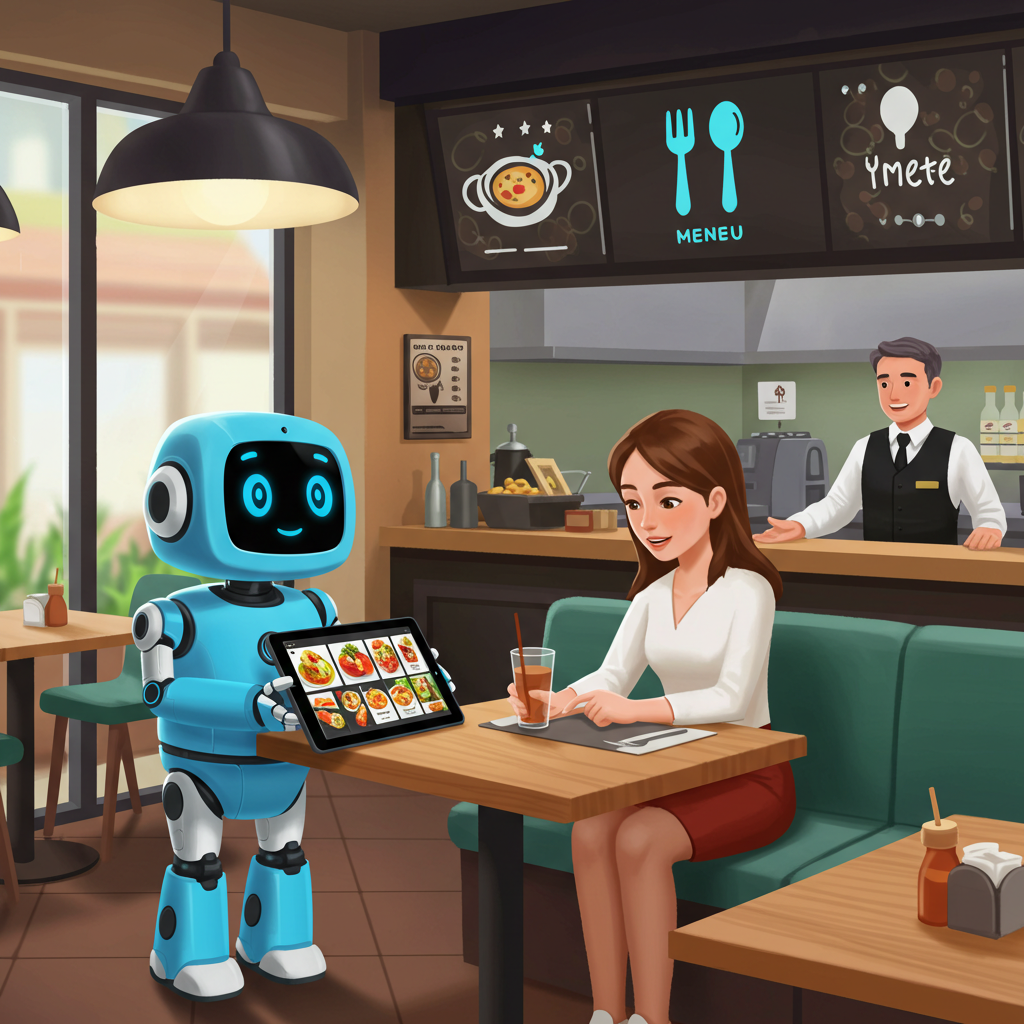
Imagine a restaurant where everything runs smoothly, from the kitchen to the customer’s table. Orders are always right, staff are never overwhelmed, and customers leave with a smile, eager to return. This isn’t just a dream! It’s becoming a reality thanks to amazing new technologies in the food world.
The restaurant industry is changing super fast. Just like how smartphones changed how we talk, new tools are changing how restaurants work. It’s no longer enough to just have a basic cash register. Restaurants need clever solutions to keep up. This is where AI POS integration comes in.
This new way of doing things goes way beyond simple Point of Sale (POS) systems. Think of it as giving your regular checkout system a super-smart brain! It brings in advanced computer helpers, better ways to serve people, and smarter ways to use information [Loman.ai, Katalystos, SPD.tech].
Our goal here is to explore how this amazing Artificial Intelligence (AI) can truly enhance POS with AI for a restaurant. We’ll look at how it makes restaurants more efficient, helps them earn more money, and makes sure customers have the best experience possible [SPD.tech, Orders.co]. Get ready to see how smart tech is changing how we eat out!
TLDR: Key Takeaways
- AI POS integration is transforming restaurants by embedding advanced AI features into traditional POS systems for enhanced efficiency.
- It leverages *machine learning*, *predictive analytics*, and *automation* to go beyond basic transaction processing, acting as an active driver for restaurant performance.
- Key benefits include **operational efficiency** through automated inventory, optimized staff scheduling, and reduced manual tasks.
- It significantly **enhances customer experience** via personalized recommendations, faster and more accurate order processing, and improved loyalty programs.
- AI facilitates **data-driven decision-making**, offering predictive analytics for sales and menu optimization, and reducing waste.
- It strengthens **fraud prevention and security** by detecting suspicious transactions and preventing various forms of loss.
- Practical applications involve intelligent inventory management, personalized upselling and cross-selling, dynamic pricing, automated order taking, and Kitchen Display System (KDS) optimization.
- Smart restaurant technology creates a connected ecosystem, coordinating kitchen equipment, monitoring temperatures, updating digital menus, and integrating seamlessly with mobile payments and delivery platforms.
- The future of restaurant POS AI promises hyper-personalization, predictive maintenance, advanced robotics integration, and robust ethical considerations regarding data privacy.
Table of Contents
- What is AI Integration with Restaurant POS?
- Key Benefits of AI POS System
- Practical Ways to Enhance POS with AI
- Embracing Smart Restaurant Technology
- The Future of Restaurant POS AI
- Conclusion
- FAQ
What is AI Integration with Restaurant POS?
Let’s break down what this fancy term really means. AI integration with restaurant POS is all about adding special Artificial Intelligence features directly into the normal cash register or Point of Sale system that restaurants use every day. These special features include things like:
- Machine learning: This is like teaching a computer to learn from lots of examples, just like you learn from experience. It uses data to get smarter over time.
- Predictive analytics: This means using past information to guess what might happen in the future. For example, predicting how many pizzas you’ll sell on a rainy Tuesday.
- Automation: This is when computers do tasks all by themselves, without a person needing to tell them every single step.
So, when we talk about AI integration with restaurant POS, we’re talking about embedding these clever computer brains right into your restaurant’s main checkout and ordering system [Loman.ai, Katalystos, Voiceplug.ai].
How is this different from a regular POS?
Think about a traditional Point of Sale system. It’s usually good at handling basic stuff: taking orders, printing receipts, and keeping track of simple inventory. It’s like a calculator and a notebook rolled into one. It records what happens.
Now, picture an AI-enhanced POS system. This is much more active and smart! Instead of just recording sales, it actively looks at all the customer information and what’s happening in the restaurant *right now*. It can then use this information to make smart decisions and automate tricky jobs. It can even talk to customers, just like a helpful voice assistant you might have at home, to take orders [Loman.ai, Katalystos, Voiceplug.ai].
Here are some special things AI can do with a POS system:
- Predicting sales patterns: It can look at past sales data and guess when you’ll be busy and what items will be popular.
- Offering targeted product recommendations: It can suggest specific dishes or drinks to customers based on what they’ve ordered before or what other people like.
- Automating stock replenishment and workforce scheduling: It can tell you when to order more ingredients and even help create the best work schedule for your staff [Katalystos, SPD.tech].
Basically, the smartness and automation that AI adds turn the POS system from a simple tool that just records things into an active helper. It becomes a key driver that pushes the restaurant to perform better in every way [SPD.tech, Popmenu]. It’s like upgrading from a regular bicycle to an electric bike – same goal, but much easier and more powerful!
Here’s a video that explains how AI is already changing the food industry:
Key Benefits of AI POS System
When restaurants use a smart, AI-powered POS system, they gain many big advantages. These advantages help both the people who own and run the restaurants, and the customers who visit them. Let’s explore some of these exciting benefits.
Operational Efficiency with Smart Technology
One of the biggest helpers AI brings is making everything run more smoothly. This is called operational efficiency.
- Automated Inventory Management:
- Imagine never running out of your most popular ingredients, like tomatoes for your famous pizza, or having too many lettuces that spoil. AI helps with this!
- The system constantly checks how much stock you have. Then, it uses past information to guess how much you’ll need in the future. This means you order just the right amount, preventing things from running out or going to waste. This smart stock control also makes ordering new supplies much easier and faster [Orders.co].
- This intelligent inventory system ensures that popular items are always available, keeping customers happy and reducing the stress of last-minute ordering. It’s like having a super-organized assistant who knows exactly what you need and when.
- Optimized Staff Scheduling:
- Have you ever been to a restaurant where there aren’t enough waiters during a busy time, or too many when it’s quiet? This can make service slow or waste money.
- AI can solve this problem! It looks at how busy the restaurant has been in the past, checking sales records and busiest hours. Then, it creates the best possible schedule for the staff.
- This means there are always enough people working during busy times, and not too many during slower times. This clever staffing plan saves money on wages and makes sure customers get fast, good service [SPD.tech].
- Restaurant managers can spend less time struggling with complex schedules and more time focusing on other important tasks, knowing their team is well-managed.
- Reduced Manual Tasks:
- Many jobs in a restaurant are repetitive and take a lot of time, like writing down orders, taking phone orders, or checking all the numbers at the end of the day.
- AI can take over these boring, time-consuming tasks. It can handle order entry quickly and accurately. It can even take phone orders using smart voice systems.
- By letting AI handle these routine jobs, human staff are free to do more important things. They can focus on making customers happy, solving problems, or helping guests feel welcome. This makes work more interesting for staff and improves the overall dining experience [Loman.ai, Popmenu].
- Think of it like having a robot helper that handles all the paperwork, so you can spend more time chatting with friends.
Enhanced Customer Experience through Intelligent Interaction
A big part of a great restaurant is making customers happy. AI helps here in many ways.
- Personalized Recommendations:
- Imagine going to your favorite restaurant, and the menu already knows you like spicy food or always order the chocolate dessert.
- An AI-powered system remembers what customers have ordered before and what they seem to like. It uses this information to suggest menu items that are perfect for them.
- This not only makes customers feel special, but it also helps the restaurant sell more. For example, if you always order coffee, it might suggest a new pastry that goes well with it. This leads to more sales and a much happier dining experience [Katalystos, Expert Market].
- This level of thoughtful service truly makes customers feel understood and valued, encouraging them to return again and again.
- Faster Order Processing & Accuracy:
- Nobody likes waiting a long time for their food, or getting the wrong order.
- AI-driven systems can take orders much faster and with incredible accuracy. Whether it’s a voice assistant taking an order or a digital kiosk, the chances of mistakes go way down.
- This means customers get their food quicker, and the chef knows exactly what to cook. Less waiting and fewer errors mean happier customers who are more likely to come back [Voiceplug.ai, Loman.ai].
- This speed and precision translate directly into a smoother, more enjoyable meal for every guest.
- Improved Loyalty Programs:
- Many restaurants have loyalty programs to reward regular customers. AI makes these programs even better.
- By looking at what customers buy and how often they visit, AI can figure out what rewards or special offers would make them happiest. Instead of sending out general coupons, the system can send personalized deals.
- This makes the loyalty program much more effective. Customers feel more connected to the restaurant, which makes them want to keep coming back and spending their money there [Katalystos, Popmenu].
- It transforms a simple points system into a genuine relationship builder, encouraging sustained customer engagement.
Data-Driven Decision Making with AI
Running a restaurant is tough, and making smart choices is key. AI helps managers by giving them very useful information.
- Predictive Analytics for Sales & Menu Optimization:
- It’s hard to guess what customers will want next week or next month. But AI can help!
- It uses “predictive analytics” to look at past sales and trends to guess future sales. This means managers can see which dishes are becoming popular and which are selling less.
- Based on this, they can decide to change menu prices, try new ingredients, or remove unpopular items. This helps the restaurant always offer what people want and make the most money [Katalystos, Orders.co, SPD.tech].
- This proactive approach allows restaurants to stay ahead of changing tastes and market demands, ensuring their menu is always fresh and appealing.
- Waste Reduction:
- Throwing away food that hasn’t been used is a big problem for restaurants, both for the environment and for their wallets.
- AI can analyze how much food is being wasted and how quickly ingredients are used up. It can then provide insights that help the restaurant make better choices about what to buy and how to prepare food.
- By minimizing extra ingredients and reducing waste, the restaurant saves money, which directly helps its bottom line [Orders.co, SPD.tech].
- This smart management of resources is not only good for profitability but also aligns with sustainable business practices, appealing to environmentally conscious customers.
Fraud Prevention & Security
Keeping a restaurant safe from theft or mistakes that lose money is very important. AI acts like a watchful guard.
- Detection of Suspicious Transactions:
- Sometimes, things happen that look a bit strange with money or orders, and it could be a sign of fraud.
- AI algorithms are always watching transaction patterns. They can quickly spot anything that looks unusual or out of the ordinary. If something suspicious comes up, the system can immediately flag it or even stop the transaction right away.
- This acts as a powerful shield against dishonest activities, protecting the restaurant’s earnings [Katalystos].
- This real-time monitoring provides an essential layer of security, giving owners peace of mind.
- Loss Prevention:
- Loss prevention isn’t just about stopping big scams; it’s also about preventing small losses that add up, like incorrect discounts or forgotten charges.
- AI keeps an eye on all sales and order histories. Using its clever algorithms, it can find patterns that might show internal theft (from staff) or external fraud (from customers).
- By spotting these problems early, AI helps restaurants put strong measures in place to stop losses from happening. This helps keep profits safe and makes sure everyone is being honest [Katalystos].
- It acts as a deterrent and a detection system, strengthening the financial integrity of the restaurant.
Practical Ways to Enhance POS with AI
Now that we know the benefits, how can restaurants actually put AI to work with their Point of Sale systems? Here are some concrete and effective ways that restaurants can truly enhance POS with AI to make a real difference in their daily operations.
Intelligent Inventory Management
As discussed earlier, smart inventory is a game-changer.
- Detail: Restaurants can set up AI systems that are super good at guessing what ingredients they’ll need. These systems look at everything – past sales, weather forecasts (people order more soup when it’s cold!), special events, and even holidays.
- With this advanced demand forecasting, the system predicts with great accuracy how much of each item you’ll need. This means you won’t run out of popular dishes, which would disappoint customers. It also means you won’t buy too many fresh items that might spoil, like fruits or vegetables, reducing costly waste. By optimizing how much and when you order, you save money and always have what you need [Orders.co].
- This intelligent stock control ensures freshness and minimizes financial losses from expired or unused products. It takes the guesswork out of ordering, making the entire supply chain more reliable.
Personalized Upselling & Cross-Selling
This is all about suggesting more items to customers in a smart way.
- Detail: AI can be built right into the Point of Sale system. When a customer orders, the AI instantly looks at what they’ve bought before and what they seem to like.
- Then, it suggests other items that would go well with their order (this is called cross-selling, like saying, “Would you like fries with that burger?”). Or it might suggest a more expensive or bigger version of what they’re ordering (this is called upselling, like “Would you like to upgrade to a large drink?”). Bossman.ai
- Because these suggestions are personalized and smart, customers are much more likely to say yes. This can significantly increase the total amount of money each customer spends, which means more profit for the restaurant [Katalystos, Voiceplug.ai].
- It’s like having a super-attentive server who remembers your favorites and always has a great suggestion, making your meal even better.
Dynamic Pricing
Imagine prices changing like they do for airline tickets, but for food!
- Detail: Restaurants can use AI programs that change menu prices in real-time. This smart system can react to many different things. For example, during the busiest dinner rush, when demand is high, prices might go up slightly.
- During quieter times, like late afternoon, prices might go down a bit to attract more customers with specials. It can also adjust prices based on how much of an ingredient you have – if you have too much of an item nearing its expiration date, the price could be lowered to sell it quickly.
- This way, the restaurant makes the most money possible and also helps manage its stock effectively, reducing waste [Katalystos].
- This flexible pricing strategy allows restaurants to maximize revenue during peak periods and stimulate demand during off-peak times, balancing supply and demand with clever automated adjustments.
Automated Order Taking
Taking orders can be a busy and sometimes stressful job for staff. AI can help a lot.
- Detail: Restaurants can use voice-controlled AI systems (like smart speakers) or clever chatbots. Bossman.ai These can handle phone calls for orders, take orders at drive-thrus, or even work at self-ordering kiosks inside the restaurant.
- These AI systems are very accurate when processing orders, even if there’s background noise or someone has a different accent. This means fewer mistakes in orders and less work for the human staff.
- Customers benefit from shorter wait times and accurate orders, which makes their experience much better. It also frees up staff to focus on other important duties, like delivering food or helping guests with special requests [Voiceplug.ai, Loman.ai].
- This technology improves operational flow and customer satisfaction by making the initial interaction seamless and efficient, regardless of the channel.
Kitchen Display System (KDS) Optimization
The kitchen can be a very busy place, with many orders coming in at once.
- Detail: AI can be linked with the Kitchen Display System (KDS), which is like a digital screen in the kitchen showing all the incoming orders.
- AI helps organize the orders in the kitchen. It can decide which items should be cooked first based on how long they take to prepare, when the customer wants to pick them up, or how long a customer has already been waiting.
- This smart organization prevents bottlenecks (where things get stuck and slow down), ensures food is fresh when it’s served, and helps make sure every order comes out on time. It’s like having a super-smart traffic controller for your kitchen [SPD.tech].
- By optimizing the workflow, AI significantly reduces kitchen chaos, leading to faster service, less waste, and consistently high-quality food preparation.
Embracing Smart Restaurant Technology
Thinking about AI POS integration isn’t just about one system; it’s about building a whole network of clever devices. It’s a foundational element and a vital part of what we call the wider smart restaurant technology ecosystem.
Imagine all the different parts of a restaurant talking to each other, sharing information, and working together seamlessly. That’s what a smart restaurant aims to be.
The Connected Restaurant Ecosystem
When a restaurant’s Point of Sale system is powered by AI and then connected to other smart devices, it creates a truly intelligent environment. These other devices are often part of the Internet of Things (IoT), which means everyday objects are connected to the internet and can send and receive data. Think of it like a team of smart helpers all working together.
Some of these connections and what they help with include:
- Coordinating kitchen equipment for optimal workflow: Imagine smart ovens that automatically start preheating when an order comes in for a baked dish, or fryers that adjust temperature based on the type of food being cooked. The AI-powered POS can tell these smart appliances what to do, making the cooking process faster and more consistent.
- Monitoring fridge temperatures in real-time to prevent spoilage and ensure safety: Smart sensors in refrigerators and freezers can constantly check the temperature. If a fridge starts getting too warm, the sensors instantly alert the system and the staff. This helps prevent food from spoiling and ensures that all food safety rules are followed, protecting both customers and the restaurant’s reputation.
- Providing instant updates to digital menu boards based on inventory or promotions: If a popular dish runs out, the AI POS can immediately update digital menu boards to show it as unavailable. Likewise, if there’s a special promotion or a happy hour, the AI can automatically display the new prices or items. This keeps menus accurate and engaging without needing a person to manually change everything.
- Enabling seamless mobile payments and integrations with third-party delivery platforms: The AI POS system can easily link up with various payment apps on customers’ phones, making checkout super fast and easy. It also talks directly to popular food delivery apps, so orders from those services go straight into the kitchen system without anyone having to re-enter them. This speeds up delivery and reduces errors [Loman.ai, SPD.tech].
This entire interconnected environment leads to a restaurant that is much more responsive, efficient, and intelligent. It’s better able to meet and even go beyond what customers expect today. People want quick service, personalized experiences, and easy ways to pay – and a smart restaurant, with AI at its heart, can deliver all of that and more [SPD.tech, Orders.co]. It’s about creating a truly modern dining experience.
The Future of Restaurant POS AI
The world of Artificial Intelligence is always growing and getting smarter. So, what exciting things can we expect from restaurant POS AI in the years to come? Get ready for even more amazing changes!
Hyper-Personalization: Beyond Basic Recommendations
- Detail: Right now, AI can suggest things based on what you’ve ordered before. But in the future, it will go much, much deeper. This is called hyper-personalization.
- The AI will learn tiny details about what each guest likes. It might notice your preferred spice level, if you always choose vegetarian options, or even if you tend to order light meals on certain days. It could adapt the way it serves you, perhaps by suggesting dishes based on your dietary needs (like gluten-free or nut-free), or even by looking at reviews you’ve written online for other places.
- Some advanced ideas even talk about real-time mood detection, where the system might subtly suggest comfort food if it detects you’ve had a tough day (though this raises privacy questions!). This level of understanding will make every customer feel like the restaurant truly knows and cares about them [Expert Market, Katalystos].
- This will transform dining into a uniquely tailored experience for every individual, creating an unparalleled sense of belonging and satisfaction.
Predictive Maintenance: Fixing Problems Before They Happen
- Detail: Imagine if your car could tell you it needed an oil change *before* a warning light came on, or if your phone battery warned you it was about to fail weeks in advance. That’s the idea behind predictive maintenance for restaurant equipment.
- Next-generation AI systems will constantly keep an eye on how well the POS hardware (like the touchscreen or receipt printer) and all the connected kitchen equipment (ovens, refrigerators) are working. They will look for tiny signs that something might be about to break down.
- If the AI spots a potential problem, it will flag it immediately. It might even try to fix minor issues on its own or alert a technician to come for a repair *before* the equipment completely stops working. This means fewer unexpected breakdowns, less disruption to the restaurant, and lower repair costs over time [SPD.tech].
- This foresight will drastically reduce costly downtime and unexpected operational halts, ensuring a smoother, more reliable restaurant environment.
Advanced Robotics Integration: Human and Robot Teams
- Detail: We’re already seeing some robots in restaurants, maybe helping with serving or making coffee. In the future, AI POS platforms will talk directly and seamlessly with these robots.
- When a customer places an order, the POS system won’t just tell the kitchen what to make; it will also tell an autonomous delivery robot exactly where to pick up the order and which table or customer to take it to. For serving robots, the POS will coordinate their movements and tasks with incredible precision.
- This will create a smooth flow where humans and robots work side-by-side, each doing what they do best. Robots handle the repetitive tasks of moving food, while human staff focus on the personal touch and complex problem-solving. It’s a fully integrated “human-robot” operational flow that makes service super-efficient [SPD.tech, Orders.co].
- This collaborative approach promises to revolutionize service speed and consistency, freeing human staff for more engaging customer interactions.
Ethical Considerations and Data Privacy: Being Responsible with Information
- Detail: As AI systems get smarter, they collect and use a lot more information about customers – what they like, when they visit, how they pay. While this is great for personalization, it also brings up important questions about privacy.
- The restaurant industry will need to think carefully about what information is collected, how it’s stored, and who can see it. There are already laws in place, like GDPR in Europe and CCPA in California, that protect people’s data. These laws will continue to evolve, and restaurants will need to follow them very strictly.
- It means restaurants must have clear rules and systems to make sure customer information is used responsibly, kept safe, and that customers know what data is being collected about them. Transparency and trust will be key [Katalystos, SPD.tech].
- Navigating these complex ethical waters will be crucial for maintaining customer trust and ensuring responsible technological advancement.
Conclusion
The restaurant world is changing, and AI integration with restaurant POS is leading the way. It’s not just a fancy gadget; it’s a powerful tool that makes restaurants incredibly efficient, helps them connect with customers in a personal way, and gives them smart insights from all their data. These benefits span across every part of how a restaurant operates [SPD.tech, Orders.co, Katalystos].
By truly embracing this technology, restaurants can significantly enhance POS with AI. This means smoother operations in the kitchen, happier customers at the tables, and a real advantage over competitors in a fast-moving market. From predicting what customers will order to keeping track of ingredients and even helping with staff schedules, AI makes everything better.
Looking ahead, we can see that choosing to use smart restaurant technology isn’t just a good idea – it’s essential for any restaurant that wants to succeed in the modern world. The exciting potential of the future of restaurant POS AI is immense. With hyper-personalization, systems that predict problems before they happen, and even robots working alongside people, AI will continue to shape and improve the dining experience for everyone. Get ready for a future where eating out is smarter, faster, and more delightful than ever before!
FAQ
Questions About AI POS Integration
Q: What is AI POS integration?
A: AI POS integration involves embedding Artificial Intelligence features like machine learning, predictive analytics, and automation directly into a restaurant’s Point of Sale (POS) system. This transforms a basic transaction system into a smart, active helper that enhances operations and customer interactions.
Q: How does AI integration benefit restaurant customers?
A: Customers benefit from faster and more accurate order processing, personalized menu recommendations based on past preferences, and improved loyalty programs with tailored rewards. These features lead to a smoother, more enjoyable, and personalized dining experience.
Q: Can AI POS integration help reduce food waste?
A: Yes, absolutely! AI can analyze past sales data, current trends, and even external factors like weather to accurately predict demand for ingredients. This intelligent inventory management helps restaurants order just the right amount of stock, significantly reducing spoilage and food waste.
Q: Is AI POS integration only for large restaurants?
A: While large chains might have been early adopters, AI POS integration is becoming increasingly accessible and beneficial for restaurants of all sizes. Smaller establishments can also leverage its benefits for efficiency, customer satisfaction, and data-driven decisions to compete effectively in the modern market.