
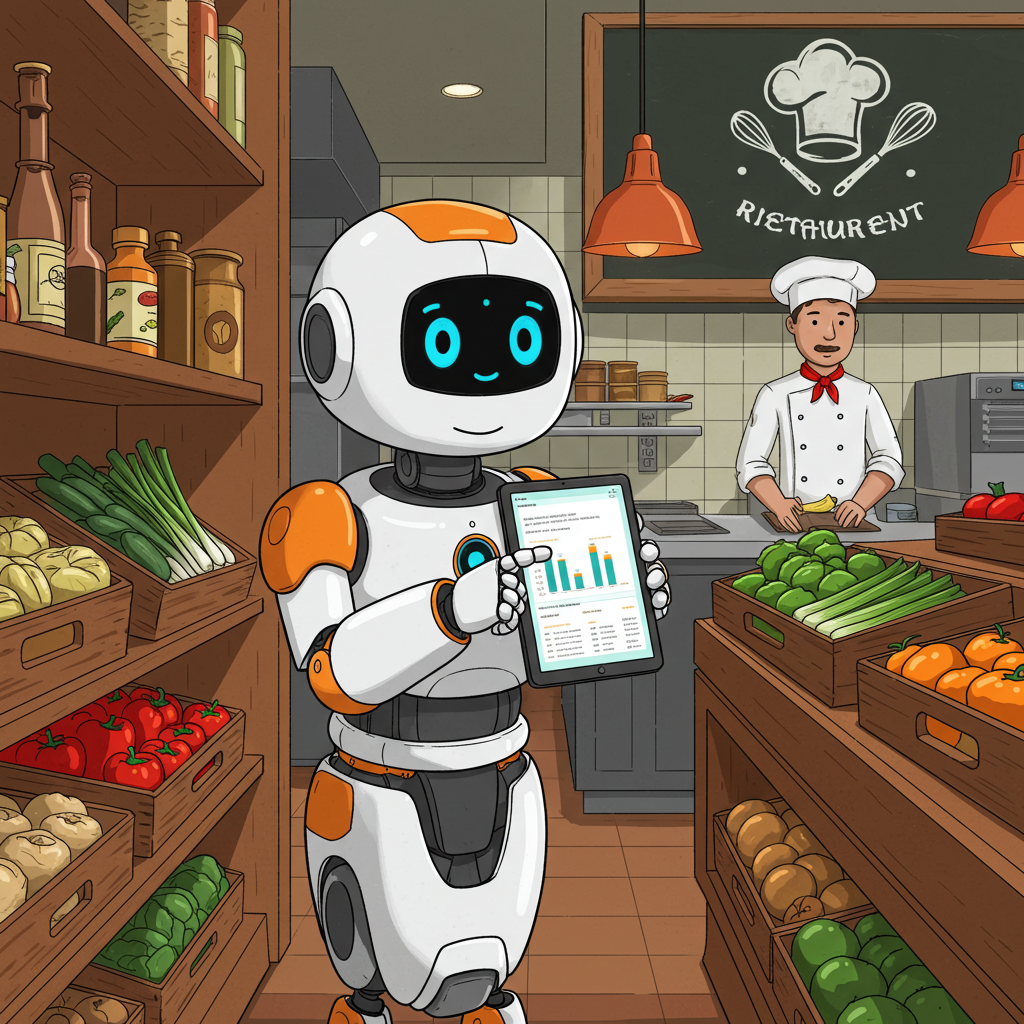
Imagine a restaurant where everything runs like clockwork, where customers always get exactly what they want, and waste is almost a thing of the past. Sounds like a dream, right? Well, that dream is becoming a reality thanks to some super-smart technology!
Restaurants today are under huge pressure. They need to be faster, more organized, and offer amazing experiences to keep up with quickly changing technology and what people expect when they go out to eat. People want their food quickly, they want it made just for them, and they want it to be perfect every time.
For a long time, restaurants used traditional Point-of-Sale (POS) systems. Think of these as fancy cash registers that mostly just recorded sales. But these systems often aren’t smart enough to handle all the tricky parts of running a modern restaurant. They struggle with things like keeping track of everything, knowing how many people will show up, and making each customer feel special. These systems often aren’t smart enough to handle all the tricky parts of running a modern restaurant.
But now, there’s a powerful new solution: AI POS integration. This means adding Artificial Intelligence (AI) — which is like giving computers a brain to learn and solve problems—right into these Point of Sale platforms. This clever combination brings much smarter automation, helps restaurants understand their business better using data, and lets them connect with customers in a really personal way. It’s truly a game-changer for any restaurant looking to stay ahead! AI POS integration
In this detailed article, we’re going to dive deep into what AI integration with restaurant POS really means. We’ll explore all the amazing ways it helps restaurants, like making things more efficient, improving customer experiences, making better use of information, and even cutting down costs. We’ll also look at clever ways to use AI to make restaurant Point of Sale systems even better, see how it fits into the bigger picture of smart restaurant technology, and peek into the exciting future of restaurant POS AI.
Key Takeaways
- AI POS integration transforms restaurants by automating tasks, streamlining operations, and enhancing customer experiences.
- It significantly improves efficiency through intelligent inventory, faster order processing, and optimized staff scheduling.
- Customers benefit from personalized menu recommendations, quicker service, and targeted loyalty programs.
- Data-driven insights and predictive analytics enable better forecasting, menu optimization, and fraud detection.
- AI POS systems are crucial components of broader smart restaurant technology, enabling seamless integration with other systems.
- The future promises hyper-personalization, robotics integration, contactless ordering, and proactive maintenance.
Table of Contents
- Understanding AI Integration with Restaurant POS
- The Transformative Benefits of an AI POS System
- Practical Ways to Enhance POS with AI
- AI POS as a Core Component of Smart Restaurant Technology
- The Future of Restaurant POS AI
- Conclusion
Understanding AI Integration with Restaurant POS
So, what exactly does AI integration with restaurant POS mean? Think of it like this: you’re taking a regular Point of Sale system, which usually just handles transactions (like ringing up your order), and giving it a massive brain upgrade with artificial intelligence. This upgrade adds advanced capabilities such as machine learning, which allows the system to learn from experience; natural language processing (NLP), which helps it understand human language (like voice commands); and predictive analytics, which lets it guess what might happen next.
All these smart tools work together to do some incredible things. They automate routine tasks, intelligently sort through huge amounts of data to find useful patterns, and help the restaurant make smarter, quicker decisions. This makes the whole operation much more flexible and agile. This advanced technology changes the basic jobs of a Point of Sale system.
Let’s look at how this advanced technology changes the basic jobs of a Point of Sale system:
Core Functionality Augmentation: Making Basic Tasks Super Smart
When we talk about “core functionality augmentation,” it means that AI makes the basic jobs of a POS system much, much better. Instead of just recording sales, the AI extends these simple processes to include really smart tasks.
- Intelligent Order Routing: Imagine you order a pizza and a milkshake. An AI-powered Point of Sale system doesn’t just print the order; it knows that the pizza order should go straight to the pizza oven station in the kitchen, and the milkshake order goes to the drink station. It automatically sends each part of the order to the correct place, making sure things get started without any delay.
- Real-Time Ingredient Availability Checks: If a customer tries to order a special dish, the AI Point of Sale can instantly check if all the necessary ingredients are in stock. If the restaurant is out of avocados, the system can tell the staff right away, preventing the chef from starting a dish they can’t finish or a customer from being disappointed.
- Automated Staff Scheduling: AI can even help manage the team. It can suggest who should work and when, based on how busy the restaurant usually is at different times.
By handling these routine jobs automatically, the human staff—like waiters and chefs—are freed up. They can then spend more time doing what they do best: providing excellent customer service, making sure guests are happy, and tackling more complex cooking or management tasks. This way, the daily operations flow much more smoothly because the AI is taking care of the small details.
Shift from Basic Transactions to Data-Driven Operations: Becoming a Smart Detective
In the old days, a Point of Sale system was just like a diary that kept a record of everything sold. But with AI, this changes completely. An AI-powered POS system doesn’t just record sales; it becomes a smart detective that constantly watches and analyzes massive amounts of information flowing into the restaurant.
This information includes:
- Sales History: What sold well last Tuesday? What about during a holiday?
- Inventory Levels: How much of each ingredient is usually used?
- Customer Interactions: What did a certain customer order last time? Do they prefer spicy food or mild?
- External Factors: Is it raining? Is there a big sports game nearby? These things can affect how busy a restaurant gets.
By continuously analyzing all these data streams, the AI can help the restaurant make much better, more informed decisions. It can spot new trends, like a sudden popularity for vegan dishes, or notice when certain ingredients are being used up faster than usual. It also helps personalize experiences, perhaps by suggesting a customer’s favorite dessert when they order their meal. This big shift means the restaurant can be much more flexible and adapt quickly, offering tailored experiences to customers—something that was almost impossible with older systems that just recorded numbers. This big shift means the restaurant can be much more flexible and adapt quickly, offering tailored experiences to customers—something that was almost impossible with older systems that just recorded numbers. Restaurant POS systems provide comprehensive data. The integration of artificial intelligence with Point of Sale systems transforms retail efficiency and customer experience.
The Transformative Benefits of an AI POS System
Let’s explore the many incredible advantages that come with having an AI POS system in a restaurant. This powerful technology doesn’t just make things a little better; it completely changes how restaurants operate for the better. These benefits of an AI POS system touch every part of the business, from making daily tasks easier to giving customers amazing service and saving money.
Streamlined Operations & Increased Efficiency
One of the biggest advantages of an AI-powered Point of Sale system is how it makes daily tasks smoother and quicker. It’s like having an extra team of super-efficient helpers working tirelessly behind the scenes.
Automated Inventory Management and Supply Chain Optimization:
An AI POS system is incredibly smart when it comes to keeping track of ingredients. It connects the real-time orders coming in (like how many burgers are being sold) with how much of each ingredient is actually being used. This means it automatically manages the restaurant’s inventory, taking a huge amount of guesswork and manual counting away from the staff. This dramatically reduces the chance of human errors, like miscounting items or forgetting to order more.What’s even cooler is that the AI uses predictive analytics. This means it can look at past sales and figure out what ingredients will be needed in the future. For example, if it knows a holiday weekend is coming up and burger sales usually go way up, it can proactively suggest ordering more beef. This clever forecasting helps restaurants manage their stock much better, ordering just what they need and greatly reducing waste from spoiled or unused ingredients. This clever forecasting helps restaurants manage their stock much better. Restaurant POS systems offer automated inventory management.
Faster Order Processing and Reduced Human Error:
Imagine a busy Saturday night. With an AI Point of Sale, things speed up dramatically. The system automates sending orders directly to the kitchen, making sure the right dish goes to the right cooking station without any paper tickets getting lost or misunderstood. It also improves how accurately orders are put into the system. For instance, if a restaurant uses voice orders (where customers speak their order), the AI is great at understanding different voices and accents, reducing mistakes that might happen with a human ear.Because the system handles so much automatically, staff can do more things at once, or “multitask.” They can spend less time typing in orders and more time helping customers or preparing tables. This leads to fewer mix-ups with orders and much quicker service, which makes both the staff’s job easier and the diners much happier. This leads to fewer mix-ups with orders and much quicker service. Voice AI with POS improves order accuracy. Restaurant POS systems streamline order processing.
Optimized Staff Scheduling and Task Management:
Creating a fair and efficient staff schedule can be a nightmare for managers. But an AI POS system uses machine learning algorithms—these are like smart programs that learn from data—to help. It looks at historical demand patterns (when the restaurant is usually busy), seasonal variations (like summer crowds versus winter lulls), and even local events (like a big concert down the street).Based on all this information, the AI creates highly precise staff schedules. This means there are enough people working during the busiest times to handle all the customers, but not too many people during quieter times, which saves the restaurant money on labor costs. This optimization makes sure operations run smoothly and keeps everyone happy, from the staff to the customers. Optimized staff scheduling is a key feature of modern POS systems.
Enhanced Customer Experience & Personalization
An AI-powered Point of Sale isn’t just about making things efficient for the restaurant; it’s also about making customers feel special and giving them a truly amazing experience.
AI-Driven Personalized Menu Recommendations:
Have you ever wished a restaurant knew exactly what you’d like? An AI POS system can do just that! It uses a treasure trove of information, including a customer’s past purchase history (what they ordered before), any dietary preferences they’ve mentioned (like being vegetarian or having allergies), and even general information about them.With this data, the AI can suggest customized dishes that it thinks you’ll love. It can also cleverly suggest extra items that go well with your order (like adding a side of fries to your sandwich) or offer special rewards just for you if you’re part of their loyalty program. This incredibly personal approach makes customers feel valued, boosts their happiness, and makes them want to come back again and again, building strong loyalty. This incredibly personal approach makes customers feel valued. AI integration with POS enhances customer experience.
Faster Service Times and Reduced Customer Waits:
Nobody likes waiting, especially when they’re hungry! An AI POS system dramatically cuts down on wait times thanks to its automation. This starts from when you place your order (whether it’s with a human, through a voice AI at a drive-thru, or on an app). The system efficiently sends the order to the kitchen, and even speeds up the payment process. Voice AI with POS enables faster service. AI voice agents streamline payments.This means customers get their food faster, whether they’re sitting in the dining room, picking up from the drive-thru, calling in an order, or waiting for delivery. A quicker, smoother experience makes dining out or getting takeout much more pleasant for everyone.
Improved Loyalty Program Management and Targeted Promotions:
Keeping customers coming back is key for any restaurant. An AI POS system makes this much easier by tracking super-detailed information about how customers behave and what they prefer. This smart tracking allows the system to send out promotions and deals that are perfectly suited to each customer. For example, if you always order pizza, you might get a special discount on your next pizza order.The AI also automates and streamlines how loyalty programs are managed, making sure that loyal customers get the rewards they deserve without manual effort. This targeted approach significantly improves customer retention, meaning more people keep coming back, and they feel more connected to the restaurant. This targeted approach significantly improves customer retention.
Data-Driven Insights & Predictive Analytics
An AI POS system isn’t just about speed; it’s also a powerful tool for understanding a restaurant’s business better than ever before. It provides “data-driven insights,” which means using information to make smart decisions, and “predictive analytics,” which helps predict what will happen next.
Real-time Sales Forecasting and Demand Prediction:
Imagine knowing exactly how many customers to expect next Friday! The machine learning brains inside an AI POS system sift through huge amounts of past sales information. But it doesn’t stop there. It also considers outside factors like weather patterns (more ice cream on sunny days!), local events (a big parade can mean lots of lunch customers), and holidays.All this analysis allows the AI to make incredibly accurate guesses about future demand. This means restaurants can plan their staffing levels perfectly and order just the right amount of ingredients, avoiding both running out of popular items and having too much food go to waste. It’s all about being prepared! Restaurant POS systems support real-time sales forecasting.
Menu Optimization Based on Popularity and Profitability:
Running a restaurant means always thinking about the menu. An AI POS system helps here too. Its advanced data analysis doesn’t just show which dishes are the most popular; it also reveals which ones bring in the most profit. For example, a dish might sell a lot, but if the ingredients are super expensive, it might not be the most profitable.These critical insights are like having a wise business advisor. They help the restaurant decide what new dishes to add, which ones to remove, how to price items just right, and what special deals to run to make the most money. It’s all about making smart choices for the menu to maximize income. Menu optimization is made easier with POS data.
Identification of Trends and Potential Operational Bottlenecks:
AI is like having a super-observant detective working for your restaurant 24/7. It can spot new trends as they emerge, like a sudden increase in demand for vegetarian options or a new way people prefer to order. It also helps identify “operational bottlenecks”—these are the spots where things slow down or get stuck, like if the kitchen is always overloaded during certain hours.By finding these issues and changes in customer tastes in real-time, the AI allows restaurant managers to make quick adjustments. This could mean changing how staff are assigned, altering kitchen processes, or even updating the menu on the fly. This ability to adapt quickly helps improve the restaurant’s overall performance and keeps things running smoothly. This ability to adapt quickly helps improve the restaurant’s overall performance. Restaurant POS systems help identify operational bottlenecks.
Reduced Operational Costs & Improved Profitability
Beyond making things efficient and customers happy, an AI POS system also directly helps restaurants save money and make more profit. Every little saving adds up!
Minimizing Waste and Spoilage:
Food waste is a huge problem and cost for restaurants. But with an AI-powered Point of Sale, this problem gets much smaller. The system uses “predictive waste management,” meaning it tries to guess how much food will actually be used. It also has automated systems for reordering ingredients.These smart features work together to significantly reduce the chances of food spoiling because too much was ordered, or preventing overstocking ingredients that don’t sell quickly. This directly impacts the restaurant’s food costs, saving a lot of money over time. These smart features work together to significantly reduce food waste. Restaurant POS systems help minimize waste.
Optimizing Resource Allocation:
Every restaurant has limited resources: staff, ingredients, and time. An AI POS system helps use these resources in the smartest way possible. AI-driven scheduling ensures that staff are only working when they are truly needed, reducing unnecessary labor hours. At the same time, intelligent inventory management keeps stock levels just right, minimizing the costs of storing too many items.When these two systems work together, all resources are used much more efficiently. This leads to substantial savings across the board, helping the restaurant operate more leanly and effectively. Restaurant POS systems optimize resource allocation. The integration of artificial intelligence with Point of Sale systems aids in optimizing resources. AI voice agents can contribute to restaurant cost savings.
Identifying Opportunities for Upselling and Cross-selling:
“Upselling” means encouraging a customer to buy a more expensive version of something, and “cross-selling” means suggesting extra items that go with what they’re already buying (like a dessert after dinner). An AI POS system is excellent at this! It uses intelligent recommendations right when the customer is ordering or paying.Because these suggestions are tailored by the AI to each customer’s preferences, they are much more likely to work. This effectively boosts the “average ticket size” (how much each customer spends) and overall profitability. It’s like having a super-smart salesperson at every checkout! AI POS integration helps identify opportunities for upselling and cross-selling.
Practical Ways to Enhance POS with AI
Now that we know the incredible benefits, let’s look at some real-world examples of how restaurants can actively enhance POS with AI. These are specific ways that artificial intelligence can be added to your Point of Sale system to make a big difference in daily operations.
Voice AI for Order Taking
Imagine walking into a restaurant or driving through a drive-thru and simply speaking your order, knowing it will be taken down perfectly every time. That’s the power of Voice AI integration. This smart technology allows for “contactless” (no touching screens or menus) and super accurate order capture.
The Voice AI system can understand orders spoken over the phone, at drive-thrus, or even through kiosks inside the restaurant. It’s designed to understand all sorts of accents and language quirks, making sure that your order for “extra pickles” isn’t mistaken for “extra sprinkles”! This amazing feature frees up human staff. Instead of being tied to taking orders, they can focus on more important things, like chatting with customers, making sure the dining room is tidy, or resolving any issues. The result? Much faster service for customers and a big boost in accuracy, meaning fewer wrong orders. Restaurant POS systems can be enhanced with Voice AI for order taking. AI voice ordering is revolutionizing restaurants.
Here’s a great video that explains how this kind of smart technology can really transform a restaurant:
AI-Powered Inventory & Wastage Control
Keeping track of every onion, every piece of chicken, and every soda can be a headache for restaurants. But AI makes it a breeze! “AI-Powered Inventory & Wastage Control” involves smart stock monitoring systems that automatically keep tabs on how much of each ingredient is available in real-time.
These systems use all the sales data and information about how quickly ingredients are used up. They also use “predictive analytics,” which means they try to guess what stock will be needed. Based on this smart analysis, the system can automatically create new order requests for supplies. This drastically cuts down on manual errors (like forgetting to order more milk), prevents the awful situation of running out of popular items (“stockouts”), and reduces spoilage because the restaurant isn’t ordering too much of something that might go bad. It’s all about having just what you need, when you need it. This drastically cuts down on manual errors. Restaurant POS systems offer AI-powered inventory control.
Predictive Staffing
Figuring out how many staff members to have working at any given time is a tough balancing act. Too few, and customers wait; too many, and the restaurant wastes money on wages. “Predictive Staffing” uses AI models to solve this. These models look at tons of past information, like:
- Historical Sales Data: How many customers typically came in at 7 PM on a Friday?
- Customer Traffic: Were Tuesdays usually slow or busy?
- Order Volume: How many orders did the kitchen typically handle?
They combine this internal data with “external factors,” like knowing if there’s a big concert happening nearby (which means more customers) or if a snowstorm is expected (which means fewer). By looking at all this, the AI can predict when the restaurant will be busy or quiet with amazing accuracy. This allows managers to create optimized shift allocations, meaning the right number of people are working at the right time. This ensures there’s enough help during peak hours and helps control labor costs during slower periods. Restaurant POS systems can utilize predictive staffing. Predictive staffing helps control labor costs. AI voice agents can assist with restaurant scheduling.
Customer Relationship Management (CRM) & Personalized Marketing
Every customer is unique, and “Customer Relationship Management (CRM) & Personalized Marketing” with AI helps restaurants treat them that way. The AI tracks very detailed information about how customers buy things, what they like, and how they reacted to past special offers.
This important data is then used in two clever ways:
- Effective Loyalty Programs: The AI helps manage loyalty programs, ensuring that frequent customers get the right rewards and perks tailored to them.
- Highly Personalized Marketing Campaigns: Instead of sending the same coupon to everyone, the AI can send targeted discounts on a customer’s favorite items or suggest new dishes based on their past orders.
This level of personalization helps foster customer retention (they keep coming back!) and significantly helps the restaurant grow its revenue. It’s all about making customers feel understood and appreciated. This level of personalization helps foster customer retention. AI integration with POS enhances personalized marketing.
Fraud Detection & Security
Unfortunately, restaurants can sometimes face problems like fraud or theft. “Fraud Detection & Security” powered by AI adds an extra layer of protection. Machine learning algorithms are constantly monitoring all the transaction data—every sale, every return, every payment.
What makes them so good is that they can spot “anomalous” or unusual patterns. For example, if a specific discount is used an abnormal number of times, or if a staff member processes a strange series of refunds, the AI can flag it. This allows the AI to identify potential fraudulent activities in real-time, often before a human would even notice. This extra security helps prevent financial losses and keeps the restaurant’s money safe. This extra security helps prevent financial losses. AI integration with POS enhances fraud detection.
AI POS as a Core Component of Smart Restaurant Technology
It’s important to understand that an AI POS system doesn’t work all by itself in a corner. Instead, it’s like the heart of a bigger, super-smart organism: the “smart restaurant technology” ecosystem. Think of it as the central brain that connects and manages many different intelligent parts of the restaurant.
This smart Point of Sale system is tightly connected and works hand-in-hand with many other clever components:
- IoT Sensors in the Kitchen: These are tiny sensors that can monitor things like how hot an oven is, if a refrigerator door is open, or even the temperature of food in storage. The AI POS can get data from these sensors, helping with things like food safety or knowing when equipment might need maintenance.
- Automated Kitchen Appliances: Picture intelligent ovens that adjust cooking times based on what’s ordered, or robotic fryers that perfectly cook batch after batch. The AI POS can send orders directly to these appliances, telling them exactly what to prepare and when.
- Online Ordering Platforms: When you order food through an app or a website, the AI POS instantly processes that order, just like it would for a customer in the restaurant.
- Third-Party Delivery Networks: If your restaurant uses services like Uber Eats or DoorDash, the AI POS communicates directly with them, streamlining the entire delivery process from order placement to pickup.
This extensive integration creates a truly connected, intelligent, and even somewhat autonomous restaurant ecosystem.
Seamless Data Sharing
The integration means that critical information—like how much inventory is left, what new orders just came in, and what the AI predicts for future demand—is instantly shared across all these different systems. There are no more delays or manual updates needed between different parts of the restaurant.
Real-time Synchronization
This smart setup makes sure everything is in sync at all times. The kitchen knows exactly what to cook, the front-of-house staff knows what to expect, delivery services are ready for pickups, and managers have an up-to-the-minute view of everything. This happens in “real-time,” meaning instantly.
Unified Foundation
Ultimately, this comprehensive integration forms a powerful, unified foundation. It brings together all the intelligent parts of the restaurant into one cohesive system. This drastically reduces “operational silos” (where different parts of the business don’t communicate well) and minimizes the need for people to manually interfere with processes. Essentially, it helps the restaurant run itself more efficiently and intelligently, freeing up staff to focus on customer service and higher-level tasks. This comprehensive integration forms a powerful, unified foundation. AI integration with POS contributes to a unified foundation in smart restaurant technology.
The Future of Restaurant POS AI
The world of technology is always moving forward, and the future of restaurant POS AI is incredibly exciting! We’re talking about a future where restaurants are even smarter, more efficient, and offer experiences that feel like something out of a science fiction movie. Let’s look at some of the amazing trends we can expect to see.
Hyper-personalization through Advanced AI
We’ve already talked about personalization, but the future takes it to a whole new level: “hyper-personalization.” This means advanced AI algorithms will go far beyond just suggesting your favorite dish. They will learn so much about you that they can offer truly unique menu choices, super-targeted deals, and special messages just for you at every single time you interact with the restaurant.
Imagine walking in, and the system already knows you prefer a specific type of coffee and offers a discount on your usual pastry, even before you’ve said a word. This level of customization will allow the AI to anticipate your needs and preferences even before you consciously think about them or express them. It’s like having a mind-reading waiter! AI integration with POS enables hyper-personalization.
Seamless Integration with Robotics and Automation
Robots might sound like something from a movie, but they are increasingly becoming part of the kitchen. In the future, robotic food preparation systems, automated barista stations (that make perfect coffee every time), and even automated delivery mechanisms (like drone delivery for short distances or self-driving carts) will work directly with the AI POS system.
This direct coordination will make service even smoother and faster. It will also greatly reduce the need for manual labor for repetitive tasks, helping to cut down costs and ensuring that the quality of food and drinks is always consistent. Imagine robots making your custom order exactly right every time!
Advanced Gesture-Based or Contactless Ordering
After recent health concerns, people are more aware of touching surfaces. The future of restaurant POS AI will bring “touchless interfaces” that are powered by very smart computer vision (which lets computers “see”) and voice AI. These systems will become very common.
You might be able to simply wave your hand to select items or speak your order without touching a screen. These intuitive, highly sanitary ordering experiences will adapt to what people expect for health and safety, especially important in a world that has seen pandemics. It makes ordering simple, fast, and clean. These intuitive, highly sanitary ordering experiences will adapt to what people expect.
Proactive Maintenance and Troubleshooting for POS Systems
Nobody wants a Point of Sale system to break down during a busy dinner rush! In the future, AI-powered POS systems will be smart enough to actually “self-monitor.” This means they can watch themselves for any little errors, figure out if something isn’t working as efficiently as it should, or even predict when a piece of hardware might be about to fail.
Before a problem even causes a disruption, the system will proactively alert staff or the service company that something needs attention. This could be a warning that a software update is due or that a part needs replacing. This incredible ability to prevent issues before they happen will stop operations from being interrupted and keep downtime (when the system isn’t working) to a minimum. It’s like having a mechanic who knows your car is about to break down before you do! This incredible ability to prevent issues will stop operations from being interrupted.
Conclusion
As we’ve seen, AI POS integration is no longer just a fancy buzzword; it has become an absolutely essential technology for modern restaurants. For any eatery aiming for unmatched efficiency, better profits, and truly putting the customer at the center of everything, integrating AI into their Point of Sale system is a must. AI integration with POS is essential for modern restaurants.
This smart integration brings a whole range of incredible capabilities, from advanced automation that speeds up daily tasks to “hyper-personalization” that makes every customer feel special. It generates insightful data that helps managers make super-smart decisions and creates seamless connections within the broader “smart restaurant technology” ecosystem. All these benefits of an AI POS system work together to completely transform how a restaurant operates, from the kitchen to the dining room and beyond.
So, what’s the takeaway? Restaurants should jump at the chance to embrace this cutting-edge technology. Adopting an AI-powered Point of Sale system doesn’t just help solve today’s complicated problems, like managing staff or dealing with changing customer demands. It also “future-proofs” restaurants, meaning it prepares them for whatever changes the market or technology might bring next. The restaurants that embrace this amazing shift will undoubtedly be the ones setting the gold standard for dining excellence in the years to come. The restaurants that embrace this amazing shift will undoubtedly be the ones setting the gold standard.
FAQ
Questions About AI POS Integration
What is AI POS integration?
AI POS integration involves adding Artificial Intelligence capabilities (like machine learning, natural language processing, and predictive analytics) directly into a restaurant’s Point-of-Sale system. This upgrades a basic transaction system into a smart, data-driven operational hub.
How does AI POS integration benefit restaurants?
It offers numerous benefits, including streamlined operations (automated inventory, faster order processing, optimized staff scheduling), enhanced customer experience (personalized recommendations, faster service, targeted loyalty programs), data-driven insights (sales forecasting, menu optimization, trend identification), and reduced operational costs (minimizing waste, optimizing resource allocation, upselling/cross-selling opportunities).
Can AI POS systems really reduce food waste?
Yes, significantly. AI POS systems use predictive analytics to forecast demand and manage inventory in real-time. This helps restaurants order just the right amount of ingredients, reducing overstocking and minimizing spoilage, leading to substantial savings on food costs.
Is AI POS integration only for large restaurant chains?
While large chains can certainly benefit, AI POS integration is becoming increasingly accessible and beneficial for restaurants of all sizes. Even smaller establishments can leverage these technologies to improve efficiency, customer satisfaction, and profitability, helping them compete in a demanding market.
What does the future of restaurant POS AI look like?
The future promises even more advanced features, such as hyper-personalization (anticipating customer needs), seamless integration with robotics and automation (e.g., robotic food preparation), advanced gesture-based or contactless ordering, and proactive maintenance and troubleshooting for the POS systems themselves, making restaurants even smarter and more efficient.