
Estimated reading time: 8 minutes
TLDR
- During busy rushes, traditional phone handling costs restaurants thousands in lost orders and reduces in-house service quality due to staff distraction.
- AI for busy restaurant call management uses Natural Language Processing (NLP) to instantly answer every call 24/7, handling orders, reservations, and FAQs.
- Seamless integration with POS and reservation systems ensures real-time accuracy, eliminating human error in order entry.
- AI acts as an overflow management tool, guaranteeing zero missed calls during peak demand, which directly boosts phone order revenue.
- The ROI is significant, stemming from recovered lost sales (up to $200k annually), reduced labor needs, and enhanced customer satisfaction (CX).
Table of Contents
- Introduction: Acknowledging the Call Management Crisis
- The Pain Point: Why Traditional Systems Fail Under Pressure
- Building an Efficient AI-Powered Command Center
- Specialized AI Solutions for Peak Times
- The ROI: Using AI to Drive and Improve Efficiency
- Conclusion & Next Steps
Introduction: Acknowledging the Call Management Crisis
For any busy dining establishment, the sound of a ringing telephone can be the sound of money—or the sound of money walking out the door.
The Hidden Cost of the Phone
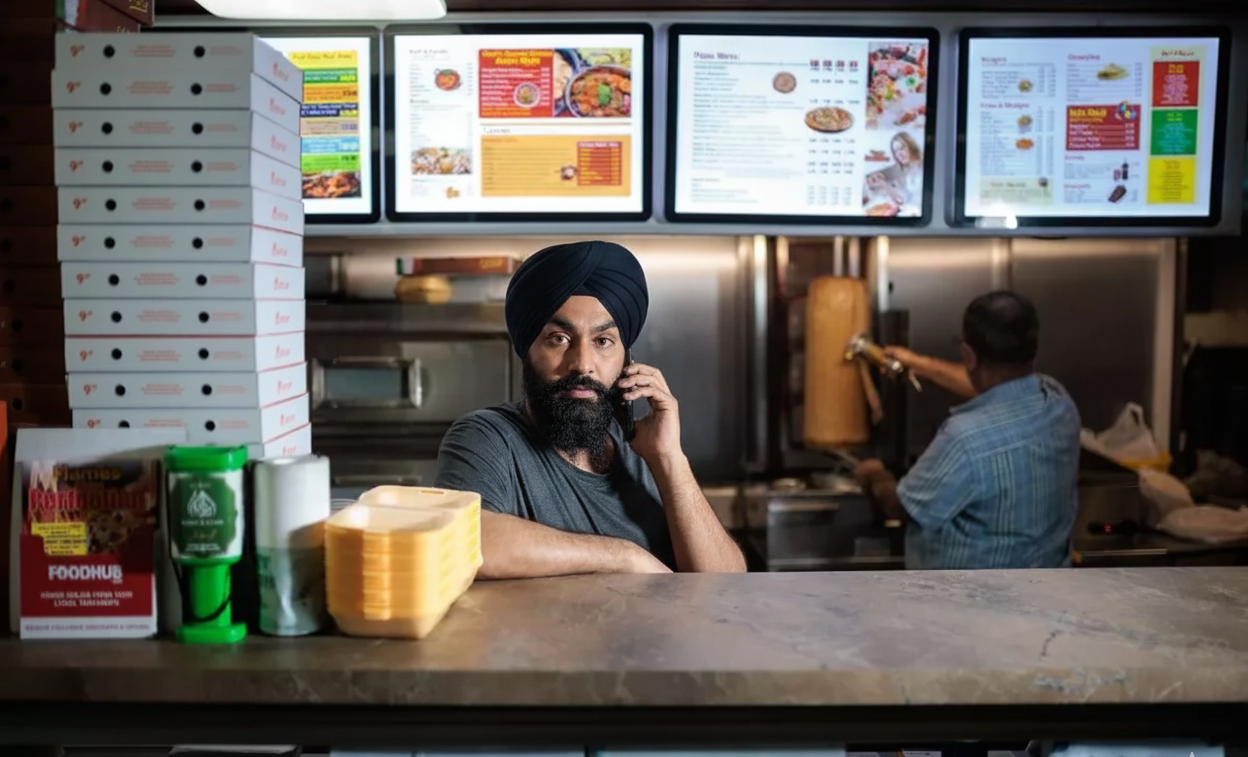
Imagine a server trying to run food while juggling a complex takeout order on the phone. This isn’t just inefficient; it’s expensive.
When phones go unanswered during the busiest lunch or dinner hours, those missed calls are lost orders and lost revenue.
Experts estimate that these missed calls during peak times cost restaurants between $15,000 and $25,000 in annual revenue from forfeited orders (SourceName).
On top of the lost sales, human staff distraction is a huge issue. When employees are constantly interrupted to answer the phone, the quality of service for in-house guests drops immediately.
The Solution is Automation
The stress of the constant ringing phone doesn’t have to exist anymore. The modern solution is simple: automation.
This is where Artificial Intelligence (AI) phone agents come in. These sophisticated voice bots are designed to transform front-of-house operations.
An AI voice agent provides instant, 24/7 call answering capability.
It handles high volumes of concurrent calls without needing any human intervention (SourceName).
This means the staff is free to focus completely on the diners in the restaurant, while the automated system takes care of the customers calling in (SourceName).
Defining the Topic and Thesis
We are defining AI for busy restaurant call management as the strategic use of advanced technology to handle phone interactions.
This technology uses Natural Language Processing (NLP) to understand what the caller actually wants—whether it’s a reservation, a takeout order, or just directions.
Crucially, these intelligent automated systems integrate directly with your Point of Sale (POS) system. This integration allows for real-time menu updates and accurate order processing.
If a customer is placed on hold for too long, they simply hang up and call a competitor. In today’s fast-paced dining market, speed is everything.
Research shows that 51% of customers hang up after waiting just one minute on hold (SourceName).
This technology is not just convenient; it is essential for modern restaurants trying to compete and provide excellent service in 2026 and beyond.
The Pain Point: Why Traditional Systems Fail Under Pressure
Restaurant phone systems rely on human capacity. And during a rush, human capacity breaks down.
The Challenge of Human Capacity
When your business uses manual methods for handling high volume calls, you hit a wall very quickly.
A human employee can only handle one conversation at a time. They cannot multitask a complex phone order while simultaneously addressing a dine-in guest’s request for the check.
During lunch or dinner rushes, demand spikes cyclically and quickly (SourceName).
The volume of calls rapidly overwhelms the limited number of employees available to answer them. This leads directly to unanswered phones, which means lost business.
The simple reality is that your staff are limited, but the incoming phone demand is not.
Consequences Beyond Lost Orders
The negative effects of poor phone management ripple throughout the entire operation.
When the phone is ringing off the hook, the consequences are immediate and severe:
- Lost Revenue: The failure to capture every call means lost reservations and lost takeout orders. For some larger operations, the annual revenue loss can climb up to $200,000 (SourceName).
- Poor Customer Experience (CX): Customers who are stuck on hold for long periods become frustrated quickly. This creates a negative first impression of the restaurant.
- Staff Frustration and Turnover: Juggling phones while managing the floor leads to intense stress for employees. The restaurant industry already struggles with high turnover, currently sitting around 79.6% (SourceName). Adding unnecessary phone stress makes retaining good workers nearly impossible.
When staff are frustrated, customer experiences suffer, creating a vicious cycle of poor service and lost business.
Customer Expectation vs. Reality
Customers today expect immediate gratification. They don’t have time to wait, especially if they are hungry.
Human capacity consistently fails under peak pressure because customers expect responses that take less than three minutes (SourceName).
If the wait goes on longer than that, people move on. A huge 91% of callers will abandon the line if they face extended holds (SourceName).
These frustrated customers don’t usually call back later; they simply shift their business to a competitor or use a third-party app instead.
This is why automation is so critical. AI provides immediate relief because it does not have the same human limitations.
The AI voice assistant can manage dozens of simultaneous calls without any decrease in quality or speed (SourceName).
It ensures that your restaurant misses zero calls, even during the most critical, high-volume periods.
Building an Efficient AI-Powered Command Center
An artificial intelligence system is more than just a voice recorder. It is a fully operational, integrated command center for all your phone interactions.
Defining the Modern System
An efficient phone system for restaurants AI goes far beyond old-fashioned, frustrating voicemail.
The foundation of this modern system is a 24/7 AI voice agent, or virtual receptionist. This agent answers the call instantly, ensuring the customer never hears a busy signal or a long hold message (SourceName).
One huge benefit? These smart systems are also designed to filter out spam calls, protecting your staff from unwanted interruptions and maintaining phone line efficiency (SourceName).
This constant, professional availability establishes a reliable communication channel for your patrons.
Core AI Functionality: Natural Language Processing (NLP)
How does the AI understand what someone is asking for? Through Natural Language Processing (NLP).
NLP is the technology that allows computers to understand, interpret, and generate human language. It’s what makes the AI sound like a smart, helpful human.
The system uses NLP to instantly decipher the caller’s intent. Is the person calling for a:
- Reservation booking?
- Takeout or delivery order?
- Simple query (like directions or hours)?
The AI listens to the conversation, identifies key phrases, and guides the customer through the necessary steps. For example, the AI can walk callers through your full menu, providing accurate details on daily specials, ingredient modifiers (like ‘no onions’), and current operating hours (SourceName).
It acts as a knowledgeable, digital employee who never gets tired or makes a mistake (SourceName).
Seamless Integration for Real-Time Accuracy
The power of AI call management isn’t just in answering the phone; it’s in the seamless integration with the rest of your operation.
The AI needs to communicate directly with your existing restaurant software in real-time.
Here are the key integration points:
POS Systems (Point of Sale)
Integration with your core Point of Sale systems (like Toast, Square, or Clover) is mandatory.
When the AI takes a takeout order over the phone, it sends that order directly to the kitchen display system (KDS) or printer. This removes the chance of human error when staff manually enter orders (SourceName).
The system can also process payments securely right over the phone and sync data across any related Customer Relationship Management (CRM) or delivery platforms. This minimizes human input and increases speed.
Reservation Platforms
The AI must integrate with your reservation management systems, such as OpenTable or Yelp Guest Manager (SourceName).
This means the virtual agent has real-time access to the host stand’s availability. If the AI is asked for a 7:00 PM table, it checks the live schedule. If the table isn’t available, the AI can immediately suggest an alternative time slot without having to put the caller on hold. This ensures the AI never accidentally double-books or over-schedules the dining room.
This is a demonstration of how this technology works:
Specialized AI Solutions for Peak Times
The true value of this technology shines when your restaurant is busiest. AI solutions for peak times are specifically engineered to handle massive demand spikes gracefully.
Overflow Management: Never Miss a Call
The moment the dining room fills up and the line starts ringing constantly, AI shifts into overflow management mode.
This is the AI’s superpower: it answers every single incoming call simultaneously (SourceName).
Instead of hearing a busy signal or being placed on hold indefinitely, the caller is immediately greeted by the professional voice bot.
By managing the entire call overflow, the system effectively recovers all the revenue that would otherwise be lost to busy signals or long waits. The service flow remains perfectly maintained, regardless of how many people call at once.
Virtual Receptionists for Repetitive Tasks
A huge portion of calls received by any restaurant are simple, repetitive questions that distract staff unnecessarily.
Virtual receptionists—the AI voice bots—handle these high-volume, low-value tasks instantly.
Imagine the time saved when the AI handles all these queries:
- “What time do you close tonight?”
- “Do you have gluten-free options?”
- “What is your special today?”
- “Where are you located, and is there parking?”
- “What is your policy regarding pets on the patio?” (SourceName)
By instantly providing these answers, staff members are freed up to focus on the more complex, face-to-face needs of the guests in the building.
Reservation Automation
Booking a table over the phone used to be a tedious, error-prone process. AI has automated the entire reservation cycle.
The process is end-to-end:
- Checking Availability: The AI checks real-time slots in the integrated reservation platform.
- Booking and Modification: The caller can book, modify, or cancel a reservation directly through the voice conversation.
- Capturing Preferences: The system captures important details, like notes about a wheelchair requirement, dietary restrictions, or a request for a booth (SourceName).
- Confirmations and Reminders: The AI automatically sends text or email confirmations and reminder messages. These automated reminders are crucial for significantly cutting down on costly no-shows (SourceName).
Waitlist and Takeout Management
AI systems excel at managing unpredictable demand for both dine-in and takeout.
Waitlist Management
If the restaurant is full, the AI can automatically place callers onto a digital waitlist.
The AI voice system integrates with the existing waitlist platform and can notify the customer via text when a table becomes available. This proactive communication keeps customers engaged and waiting happily.
By managing the digital waitlist, the AI frees up the host or hostess to greet and manage in-person guests (SourceName).
Takeout and Order Capture
For takeout or delivery, the AI ensures accurate handling of the order details.
It accurately processes complex menu items, specific modifiers (e.g., “extra cheese, side dressing, cooked medium-well”), and daily specials (SourceName).
The system immediately integrates the order into the POS system, just as if an employee had typed it in. This critical feature eliminates the common errors that often happen when a stressed employee mishears or mistypes a phone order.
The ROI: Using AI to Drive and Improve Efficiency
Implementing AI call management is not just a technology upgrade; it’s a strategic business decision that delivers massive return on investment (ROI). The goal is to improve restaurant efficiency AI drives across the whole business.
Staff Repurposing and Labor Cost Reduction
The most immediate benefit is the redirection of staff focus. By automating the phones, employees are no longer tied to the host stand answering calls.
They are free to move to higher-value tasks, such as improving in-house service quality, running food, or engaging directly with diners (SourceName).
The quantifiable financial benefits are huge:
- Revenue Boost: Restaurants using automation have seen phone order revenue boost by 26% simply by capturing every call (SourceName).
- Labor Savings: Amid ongoing staffing shortages, this technology can cut labor costs by double-digit percentages by eliminating the need for staff dedicated solely to answering the telephone (SourceName).
By allowing the automated system to handle high volumes scalably, a restaurant eliminates the operational cost and hassle of hiring more humans just to answer the phone.
Data, Analytics, and Revenue Growth
One of the most powerful, often overlooked, features of an intelligent phone system is its ability to generate data and analytics.
Every single call is transcribed and logged. This detailed data provides incredible insights:
- Predicting Volume: Analyzing call patterns helps predict daily and seasonal volume spikes, allowing managers to schedule kitchen staff more effectively.
- Tracking Trends: The system tracks which popular items are frequently ordered by phone and identifies specific customer preferences.
- Customized Upselling: Because the AI tracks preferences and is programmed to recommend items intelligently, it can suggest customized upsells during the ordering process (e.g., “Would you like to add an appetizer or make that a large size?”).
This level of intelligent upselling is highly effective, leading to reports of increased order value by over 300% (SourceName). This is passive, system-driven revenue growth.
Enhanced Customer Experience (CX)
Ultimately, AI improves the diner’s journey, which is what builds long-term loyalty.
Enhanced customer experience is achieved through consistency and reliability:
- Zero Waits: Customers appreciate instant service and zero holds.
- 24/7 Access: The ability to place an order or book a reservation at 3 AM provides unmatched convenience.
- Consistent Responses: The AI gives the same professional, accurate answer every time, which reduces complaints and builds trust (SourceName).
When summarizing the key metrics, the picture is clear:
- Revenue Recovery: Capturing $15K–$25K in annual revenue from missed calls (SourceName).
- Order Accuracy: Automated processing leads to fewer kitchen errors and fewer costly remakes (SourceName).
- Loyalty: Automated reminders drastically lower no-show rates, while consistent service builds customer loyalty.
By focusing on these operational and financial metrics, the restaurant achieves a significant competitive advantage.
Conclusion & Next Steps
The age of struggling to answer the phone during a rush is over. The competitive landscape for restaurants has shifted, and technology is leading the way.
Summary of Impact
AI for busy restaurant call management is a powerful tool that delivers survival-level gains in efficiency and satisfaction (SourceName).
The technology empowers staff by successfully automating complex calls and managing the chaos of peak demand. This automation reliably captures lost revenue, ensures high customer satisfaction, and optimizes every minute of your operation.
In summary, AI ensures you get paid for every phone call, freeing up your team to be truly hospitable.
Key Strategies Recap
For any restaurant looking to implement an advanced voice automation strategy, the deployment must follow critical steps:
- Deploy Voice AI with POS Integration: Ensure the system integrates immediately and directly with your kitchen and payment systems for instant, error-free order handling (SourceName).
- Leverage Analytics: Use the call data collected by the system to predict future volumes, identify customer favorites, and drive strategic menu changes.
- Automate Everything: Utilize the system for all repetitive tasks, from reservations and waitlists to simple queries about hours and directions (SourceName).
Call to Action (CTA)
Don’t let thousands of dollars slip away with every unanswered ring. The time to transition to smart, automated call management is now.
Start your research immediately. Look for vendors specializing in AI for busy restaurant call management that offer proven, integrated solutions.
Seek out specific industry examples, like Certus AI or BiteBerry, that are tailored for successfully managing 2026 peak demand and eliminating potential lost revenue (SourceName and SourceName).
Request demos and see firsthand how a virtual voice agent can transform your busy restaurant’s phone line from a source of stress into a powerful, revenue-generating command center.
FAQ
Questions About AI Voice Ordering
How quickly can AI answer my calls during a rush? The AI answers calls instantly—there is no delay or hold time, ensuring every caller is greeted immediately, regardless of call volume.
Will the AI accurately take complex takeout orders? Yes. Modern AI uses advanced NLP to accurately process complex menu items and specific modifiers, entering them directly into your POS system to eliminate manual entry errors.
What happens if the AI cannot understand the caller? The system is designed to escalate complex or unclear conversations gracefully to a human staff member, ensuring the customer never feels completely lost or frustrated.
Is the AI capable of handling reservation changes? Absolutely. If integrated correctly, the AI can check real-time availability and handle complete booking, modification, or cancellation requests autonomously.